E-Cars: Negative Portrayal in the Media vs. Reality
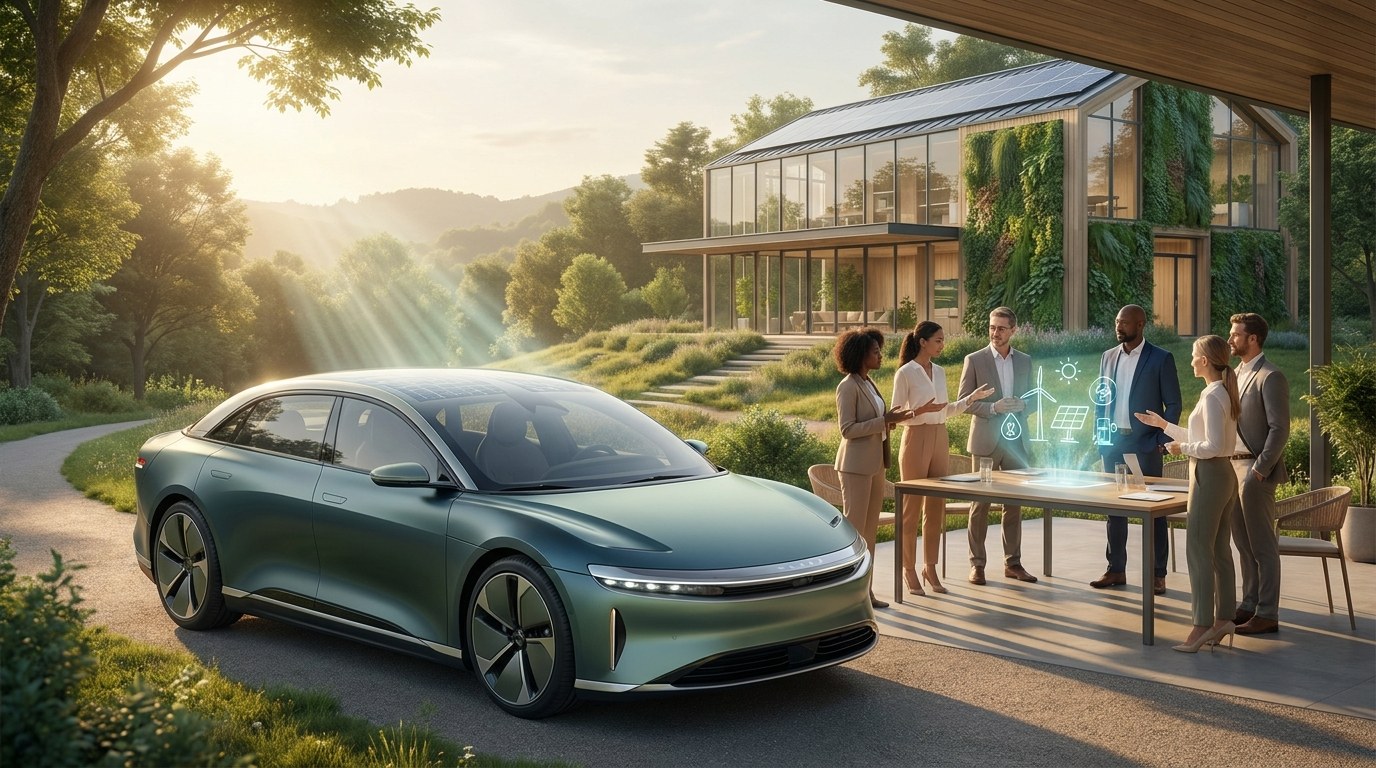
E-cars have made enormous progress in recent years – with regard to range, charging speed and safety, but also in terms of environmental aspects and cost efficiency. Tesla can be considered the market leader: The company is taking completely new and innovative paths. It does not allow itself to be guided by old dogmas, rigid structures or 'proven' production methods, but makes things possible that were previously considered impossible.
Despite these advances, e-cars – especially Tesla with its CEO Elon Musk – are often portrayed negatively in the media, leading to an emotional and often fact-free debate. Is one of the reasons that e-cars are a thorn in the side of the old, large and sluggish OEM car manufacturers with their dealer networks (who live off service), because they themselves cannot produce e-cars profitably? Or is Elon Musk the reason, because he took over Twitter and transformed it into a platform for free expression?
The former arrogance, hubris and inertia of the old car manufacturers could become a boomerang and possibly mean the end of many car manufacturers.
Efficiency and environmental aspects
E-cars are far more efficient than conventional internal combustion engine vehicles. Most electric motors have an efficiency of more than 90 percent, compared to internal combustion engines with an efficiency of only 20 to 30 percent. This means that e-cars use more energy to propel the vehicle and convert less energy into waste heat.
The topic of brake energy recuperation has already been perfected to such an extent that cars are still driving with the original brake discs or brake pads after more than 100,000 and 200,000 km. Because the braking effect, coupled with electric motors, feeds energy back into the batteries. Oil changes and service intervals are eliminated, so that the running costs per month are significantly lower than with classic petrol or diesel vehicles.
The environmental protection aspect of e-cars is also very positive. Since they produce no emissions (soot particles, fine dust, etc.) while driving, they do not contribute to air pollution. Although the production of e-car batteries requires more energy than the production of an internal combustion engine, studies show that e-cars cause significantly fewer emissions over their lifetime.
Current batteries last significantly longer, with less degradation than ten years ago. And the batteries that have to be replaced after about ten years get a second life in battery storage systems for another ten years. Currently, 95% recycling of reusable materials and raw materials from batteries is possible, so that the raw materials can be returned to the cycle. A new, very lucrative business field for companies specializing in battery recycling.
Possible health burdens or effects
A very important point is the possible health burdens in the car: electromagnetic alternating fields (electric motors, battery systems, inverters, etc.) and high-frequency, pulsed radiation (telephone, WLAN, Bluetooth). That these fields can have negative effects on our nervous system and metabolism (depending on frequencies and intensities) is beyond question for us and was already proven at university level at the end of the 1990s.
Thermal loads (heating of tissues) are a possible problem. The pulsed electromagnetic radiation that can 'dock' via our receptors and nerves in the body is possibly an even greater challenge. Comparative measurements between normal internal combustion engines, hybrid and pure electric cars compared to the measured fields and intensities in offices, apartments and public places would be important.
There are still only few reliable data on the effects of electromagnetic fields and loads in the car from telephones, WLAN and other wireless technologies. The often mentioned but so far unverifiable claims that values of several thousand nT (nanoTesla) are measured in electric vehicles cannot be found or verified by us. On the contrary: The measurements that have been carried out and documented so far show very low loads. The question arises: Do these measurements come from currently produced cars or are they rather ten or more years old – or is it simply a fact-free opinion?
The data available so far show that above all Tesla has the lowest electromagnetic loads (electrosmog stress) compared to other electric cars or normal cars.
Tesla Model S: approx. 20 nT in the head and hip area, approx. 100 nT in the foot area
"In vehicles with internal combustion engines, the electrosmog values are in most cases higher than in the electric car. With Tesla they are even strikingly low."
Tester's conclusion: "Tesla has probably deliberately shielded its batteries, motors and cables"
Measurement range: 50 Hertz to 100 Kilohertz
Source: teslamag.de/news/
We have so far assumed that the namesake of the most innovative e-car brand for us, Nikola Tesla, has left his mark on the company Tesla. Because Nikola Tesla was very aware of the effects of electromagnetic and high-frequency fields on the body.
Battery technology
Battery technology has made enormous progress in recent years. Current batteries no longer contain cobalt as a raw material in the battery chemistry, which was previously a controversial topic. Companies such as CATL, BYD and Tesla currently mainly use lithium iron phosphate batteries (LFP) or M3P batteries, which do not contain cobalt.
This eliminates the arguments often used so far regarding cobalt mining and child labor. Moreover, the accusation of child labor for cobalt mining serves more propaganda purposes. Because the large manufacturers have contracts with the large mining companies and not with the small family businesses where children try to supplement their parents' income. Cobalt itself is a by-product of copper and nickel mining and does not have to be mined separately.
Burning batteries in e-cars – a distortion of the truth or deliberate deception? In the media, the impression is repeatedly created that fires from batteries in e-cars represent a major problem and that these occur much more frequently than in cars with internal combustion engines. The facts here also paint a completely different picture, as the ratio according to insurance statistics, depending on the source, is between 1:30 and 1:60. This means that for every 1 burning e-car, there are 30-60 burning cars with internal combustion engines.
The energy density has also increased significantly. CATL, for example, has developed a battery that achieves an energy density of 205 Wh/kg and enables a range of over 1,000 km. With this battery, 500 km of range can be charged in 10 minutes, even under the coldest conditions of -20 degrees Celsius.
The latest CATL Condensed battery even has an energy density of 500 Wh/kg and is currently being tested in aircraft to switch to electric drive there as well. Another interesting company with innovative battery technology is Amprius, which has developed a 500 Wh/kg battery system, with an upward trend.
Future prospects
It is no coincidence that the Tesla Model Y is the best-selling car in the world in 2024, not only among e-cars but among all cars! The future of e-cars is very positive, and the constantly rising sales figures for pure e-cars also demonstrate this. With ever greater mass production, the costs for manufacturing and sales automatically continue to fall compared to gasoline, diesel, or hybrid cars, which will hardly be economical in a few years.
The FSD 12.4.1 Full Self-Driving (Supervised) already in use in the USA sets completely new standards in autonomous driving and has nothing to do with previous systems, regardless of the manufacturer. Tesla also demonstrates what is possible in the area of vehicle safety and crash tests with all its vehicles and builds the safest cars.
Tesla is years ahead of other car manufacturers, because with five million vehicles worldwide, enormous video data from a wide variety of driving situations can be collected daily and trained by AI in conjunction with neural networks. The improvements come in ever shorter cycles with exponential enhancements.
New technologies such as neutrinovoltaics as a decentralized energy converter can again reduce the need for ever larger battery storage systems. Because with small units of 2kW (as recently announced), the car batteries could be charged decentrally 24/7 anytime and anywhere.
Overall, the development of recent years shows that e-cars represent a more efficient, environmentally friendly, safe, and cost-effective alternative to conventional internal combustion engine vehicles. It is important that the public debate is determined by facts and not by emotions or propaganda.
Interesting Links
• CATL 500Wh/kg battery: Video
• Amprius
• Neutrino PowerCube: Video
• Neutrino-Energy Group
• Battery recycling: Redwood Materials Video battery recycling
• PV module recycling: SolarCycle Video about SolarCycle
To the category: Neutrino / Free Energy