Help for Bees: Colloidal Silver Against Varroa Mites
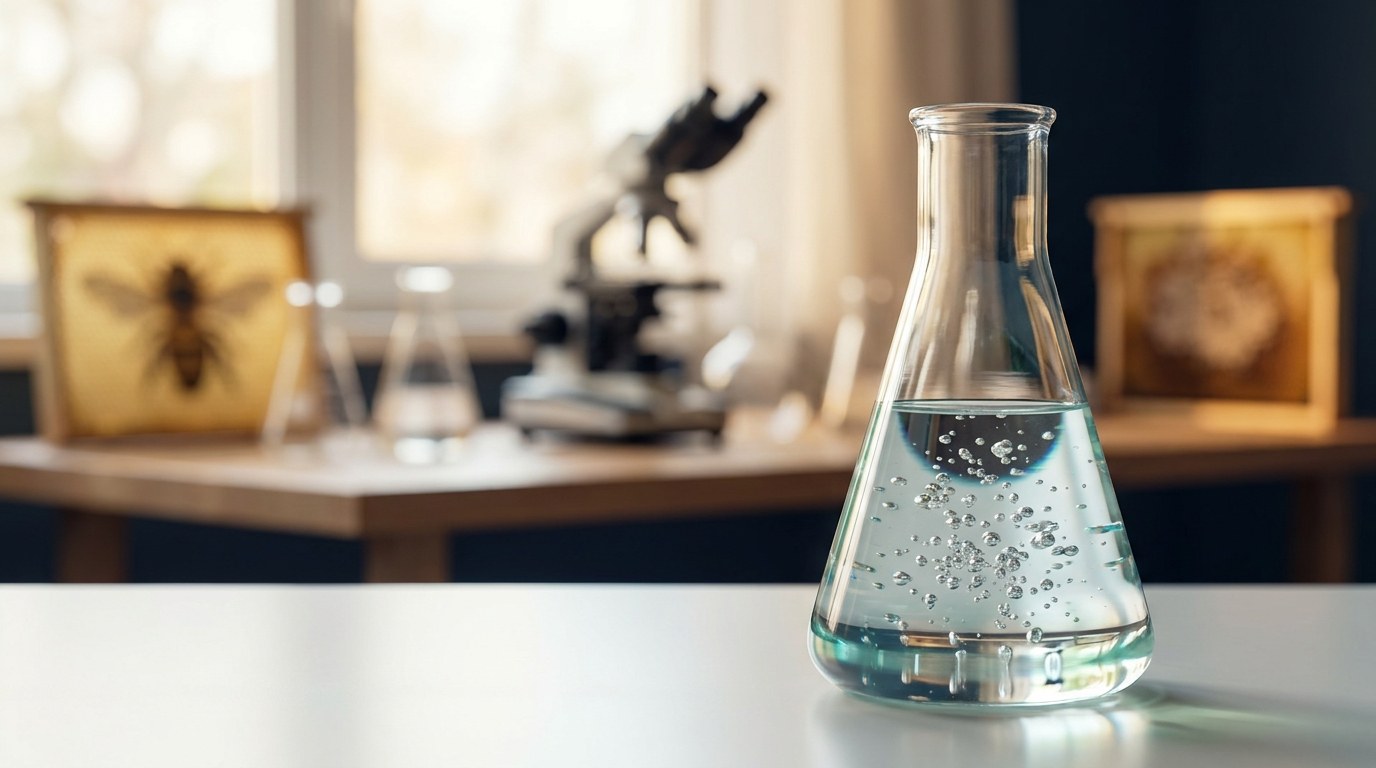
Varroa mites are the most dangerous enemies of bees. With colloidal silver one can free them from the pests
Every year beekeepers fight against it: Varroa mites are considered the main reason for the death of bee colonies. On average, 10 to 15 percent of them die annually due to mite infestation. The approx. 1.1 millimetre long and 1.6 millimetre wide mite lives as a parasite on honey bees, it develops and multiplies in the brood in the beehive.
We have received a report from a beekeeper in Gran Canaria who has had extremely positive experiences with treating his beehives with colloidal silver. In the following text Hoss describes the way in which he applies colloidal silver to his bees.
„For application I put colloidal silver (99.9 %) into a plastic spray bottle (no metal), then opened the beehive and removed everything, that is every single comb, and sprayed it from both sides, including the bees sitting on it (they were not disturbed at all) … in addition I ‘soaped’ every millimetre of the beehive.“
When I opened the beehive again the next day, the floor was full of dead mites, so it works relatively quickly. Depending on the infestation you have to repeat it a few more times, but then the bees are free – completely free of the mite.
The insidious thing about Varroa mites is that they sit on top of each other and only the top layer (which had direct contact with the colloidal silver) falls off. For me three times in a row was enough to free the bees from them. As I said: the duration depends on the infestation, but it works in any case.
At this point I would like to add one thing: we keep bees in Gran Canaria! Here there are hardly any problems with possibly too low temperatures and yet I always choose a warm, sunny day and open in the morning so that the warmth and sun during the day help the bees and the beehive to dry again.
In cool temperatures I would advise against it, also in the late afternoon when the cool night begins shortly afterwards. Start the spraying action in the morning of a warm day. It is best to start at the beginning of summer so that repeated spraying is not interrupted by long cold periods.
In winter in Germany one possibility – for caution, prevention and strengthening of the immune system: you can make a mash with sugar and silver water and feed it (no spraying actions in winter).
One more tip at the end: at full moon the quality is best. Passing it on, copying and distributing is welcome.
With kind regards in the name of the bee, Hoss“
Have you also had positive experiences with the use of colloidal metals on animals? We look forward to hearing from you!