Water Filters: How to Find the Right One for Your Needs
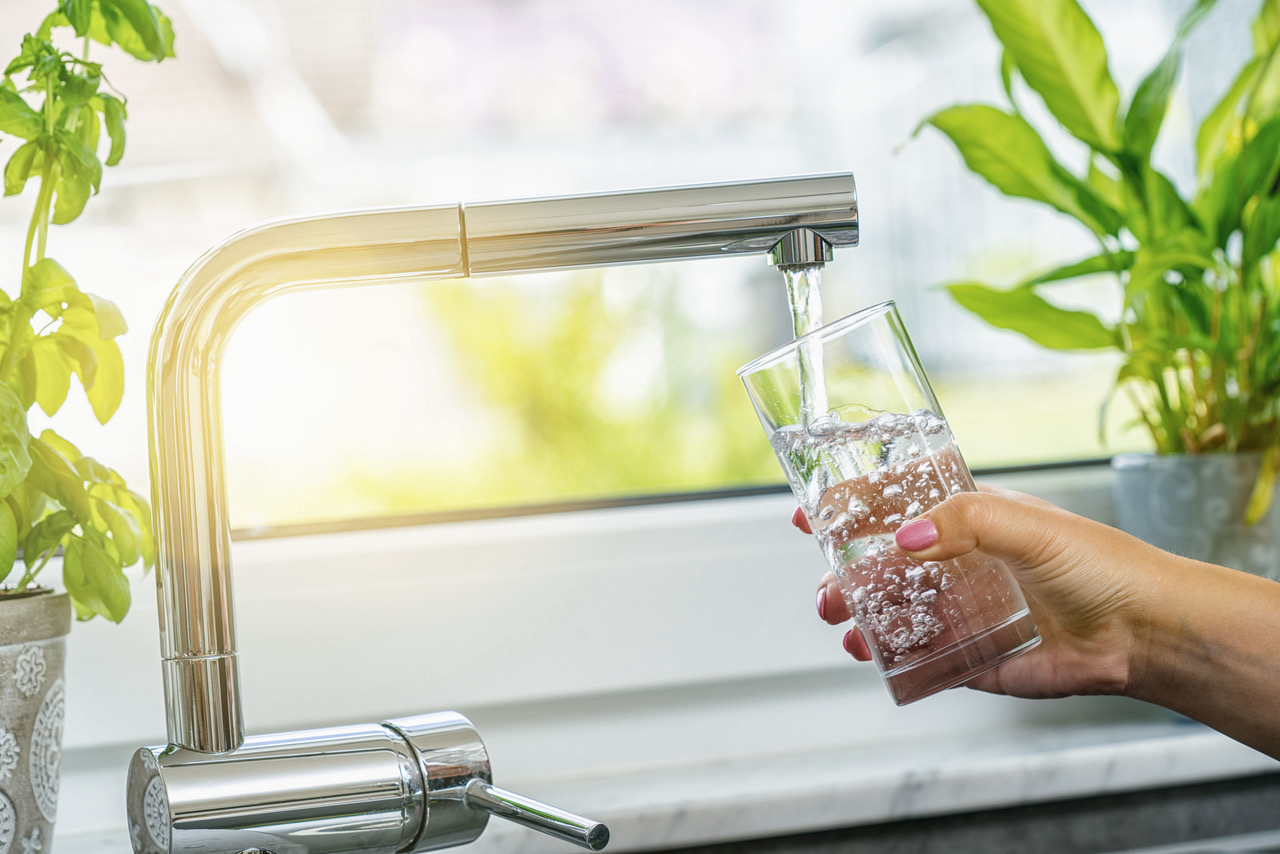
Buying advice for whole-house water filter systems and drinking water filters
Always fresh, pure water in the house? Many people wish for that. And despair when searching for the best filter. We help you choose the right whole-house water filter and drinking water filter for you. First, you need to clarify a few questions for yourself.
To shed more light on the topics of whole-house water filters, drinking water filters and water activation, we will go into the respective details in this series. We describe what we consider sensible and in which combination these systems complement each other to form a harmonious overall system. Depending on the focus, we always take into account the chemical, biological and biophysical criteria of the water.
Why should you install a whole-house water filter?
After just a few years, the inside of water pipes looks anything but clean, as many suspended particles, sand, rust, limescale and other substances accumulate over time. These deposits in turn provide a good basis for the multiplication of germs. Particles that constantly detach eventually reach your tap, your shower or even your drinking water. New water pipes in your own house can be very effectively protected for years by simple filtration measures, as can the connected appliances.
What requirements must the filter system meet?
One of the most important criteria when using whole-house water filters is the water flow rate per minute, which should be designed for the corresponding number of people and their water usage. How many liters per minute must the filter systems used filter so that there is no bottleneck in a house with, for example, 4 people?
Example: Two showers in use at the same time, a running washing machine and the kitchen tap currently in use: filters with a filtration capacity of only 20 l/min cannot handle this performance and are ruled out immediately. Filters with a water flow rate of at least 40-50 l/min should be used here, so that you do not have to forgo comfort even shortly before the end of the filter service life, when the flow rate decreases slightly.
How hard is your water?
The most important hardness-forming substances are calcium and magnesium. They are responsible for whether water is soft, hard or very hard. And this in turn affects the service life of washing machines, dishwashers, kettles and so on. Basically, water in the range of 6-10 German degrees of hardness is optimal.
• Soft water: 0-7 degrees German hardness (°dH) = hardness range I (0 to 1.3 millimoles of calcium oxide per liter)
• Moderately hard water: 7-14 °dH, hardness range II (1.4 to 2.4 millimoles of calcium oxide per liter)
• Hard water: 14-21 °dH, hardness range III (2.5 to 3.8 millimoles of calcium oxide per liter)
At high limescale values/water hardness (our recommendation: over 20 °dH), an automatic desalination system should definitely be considered, as it almost automatically removes the hardness-forming substances calcium and magnesium from the water and replaces them with sodium. This means far fewer limescale deposits in the long term and less damage to water-carrying systems, electrical appliances and fittings.
Which filter types do you need?
Filters for whole-house water filter systems are usually offered in sizes 10 inch and 20 inch. Filter housings are available as standard housings or BIG filter housings. With the floor-standing housings, whether 10 inch or 20 inch, only the “thin” 2.5-inch filter cartridges can be used. The BIG filter housings can use both the “thin” 2.5-inch filter elements and the thick 4.5-inch ones. If maximum flexibility is important to you, the BIG filter housings would therefore be preferable. The slightly higher costs should not play a decisive role in the initial purchase, as this additional investment provides future-proofing and sufficient reserves with regard to the achievable flow rate.
There are many different filter materials and properties, depending on the purpose and goal. The most frequently used filters are:
• Sediment filters (SED) filter sand, rust and suspended particles from the water
• Carbon block filters (CTO) remove chlorine, heavy metal compounds, medication residues and other pollutants
• Granular activated carbon (GAC) reduces taste and odor
• Iron filters reduce the iron content in the water
• Limescale filters lower the limescale content / water hardness
• Other special filters can also be designed for specific ingredients
With sediment filters there are various filter materials – the decisive factor is which particle sizes are to be filtered from the water. Particle sizes of 50 μm, 20 μm, 10 μm, 5 μm and 1 μm are usually used here. The smaller the filtered particle size, the less “dirt” enters the house water pipe system, which offers many advantages in the short and long term.
Activated carbon block filters mainly use 20 μm, 10 μm and 5 μm.
What is the optimal sequence of the filters?
The sequence of the filters also plays an important role in achieving the best possible water quality and the longest possible service life.
Sediment filters are the first filters (sometimes also several stages in succession to remove the sediments ever more finely), followed by activated carbon block filters and, if required, activated carbon granular filters. Since water conditions vary greatly, it makes sense to adapt the filter media individually to the existing conditions.
In every house, directly after the water meter, there should be a backflush filter that retains all particles larger than 100 μm via a coarse sieve. Since the jump from 100 μm directly to 1 μm would be too large – and the filter would clog too quickly – a gradation down to the desired size is recommended. A sensible sequence with two sediment filters is: first 20 μm, then 5 μm, or with three sediment filters in series: 20 μm, 5 μm and 1 μm.
The finer this filtration, the better subsequent filters such as activated carbon block are protected, as fine sediments do not clog the pores as quickly.
If you use a filter system with a total of three filters, you can of course try out which gradations work most sensibly.
Pressure gauges and filter replacement
With filter systems, it is advantageous to install pressure gauges before and after the filter unit so that the pressure drop after each individual filter or after the filter system can be observed. An excessive pressure drop is a sure sign that the respective filter is “used up” and should be replaced. Depending on the water quality, the amount of water filtered and the filter media used, the filters should be replaced after 3 to 6 months. Normally, no service provider is required for this, as the filter housings are simply unscrewed and the “old” filter element is replaced with a new one. Since a bypass shut-off (ball valve) is normally installed when the filter system is installed, “unfiltered” water can still flow into the water pipe system during filter replacement.
Water activation
An additional improvement of this filter system can be achieved with central water activation & water energization after the filter system. This activates the entire water supply and makes it very significant for humans, animals and plants – which is even physically measurable. The recommended systems with multiple functions use no electricity, no chemicals or magnets.
Read here about the advantages of these three variations:
• House water filter
• Drinking water filter
• House and drinking water filter in combination
To the topic overview: Water filters and water energization